
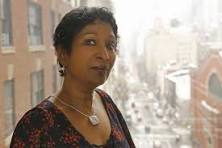
Meena Alexander, a distinguished poet
Meena Alexander, a distinguished poet, novelist, and scholar, has left an indelible mark on the literary landscape with her evocative writing and profound exploration of identity, diaspora, and the human experience. Born on February 17, 1951, in Allahabad, India, Alexander’s journey from her early years in India and North Africa to her later life in New York City has profoundly influenced her work, imbuing it with a richness and depth that resonates with readers around the world.
Table of Contents
Growing up as the eldest of three children, Meena Alexander, originally named Mary Elizabeth, embraced her true identity as Meena from a young age. At the age of five, she embarked on a journey that would shape her understanding of the world, as her family relocated to Sudan. It was in Khartoum that Alexander’s passion for language and literature first flourished. She learned to read and write early on, and by the age of fifteen, she was already publishing her poetry in Arabic translation in Sudanese newspapers.
Alexander’s academic pursuits took her across continents. After completing her Ph.D. at Nottingham University in Britain, she returned to India, where she embarked on a teaching career at esteemed institutions such as Delhi University, Central Institute of Hyderabad, and Hyderabad University. It was during her time in Hyderabad that she met her future husband, David Lelyveld, before eventually settling in New York City in 1979.
Literary Contributions:
Meena Alexander’s literary oeuvre spans poetry, novels, memoirs, and critical essays, each offering a unique perspective on the complexities of the human condition. Her novel “Nampally Road” captures the vibrancy and diversity of contemporary India, exploring themes of cultural richness, feminism, and social politics. Through vivid imagery and lyrical prose, Alexander paints a multifaceted portrait of a society in transition, where tradition and modernity collide.
In “Manhattan Music,” Alexander delves into the immigrant experience, chronicling the journey of Indian diaspora to the bustling streets of New York City. Through the lens of her characters, she grapples with issues of fanaticism, ethnic intolerance, and the search for belonging in a foreign land. Her autobiographical work, “Fault Lines,” offers a deeply personal exploration of identity and displacement, tracing her own struggles to forge a sense of self amidst constant upheaval and change.
Alexander’s poetry, characterized by its lyricism and emotional depth, has earned her widespread acclaim. From “Illiterate Heart” to “Night-Scene: The Garden,” her verses traverse landscapes of memory, longing, and resilience, offering glimpses into the human soul with exquisite sensitivity and grace.
Legacy and Influence:
Meena Alexander’s impact extends far beyond the realm of literature. Her writings have inspired generations of readers and writers, offering a poignant reflection on the complexities of migration, diaspora, and cultural identity. Through her scholarship and activism, she has championed the cause of marginalized voices, challenging prevailing narratives and advocating for social justice and equality.
In addition to her literary achievements, Alexander’s academic contributions have enriched the field of postcolonial studies and feminist theory. As a professor at Hunter College and the Graduate Center of the City University of New York, she has mentored countless students, nurturing a new generation of thinkers and creators.
Conclusion:
Meena Alexander’s life and work embody the transformative power of literature to transcend borders, bridge divides, and illuminate the shared humanity that unites us all. Her words, imbued with passion, empathy, and insight, continue to resonate with readers across cultures and generations, reminding us of the enduring power of storytelling to shape our understanding of the world and ourselves.